
Testing and Safety
Tested. Validated. Built to Last.
When you install a Viewrail system, you're trusting it with the safety of everyone who uses it. That's why we don't just calculate that our products will perform. We test them, in our own facility, to prove it.
Life Safety
Stairs and railings are life-safety components.
When you purchase a system from Viewrail, you're not just buying a product. You're trusting that you've installed something that's going to last, and will stand up to whatever life throws at it.
Stairs, railings, and guardrails aren't decorative. They're classified as life-safety components, which is why building codes like the International Residential Code (IRC) and the International Building Code (IBC) set specific load requirements that manufacturers like us are required to meet. Failures cause serious injuries. The codes exist because the stakes are real.
At Viewrail, we don't just calculate whether our systems should perform. We actually test them, in our own facility, to prove that they will.
“The Viewrail standard: every product that leaves our facility has been tested, validated, and built to last.”
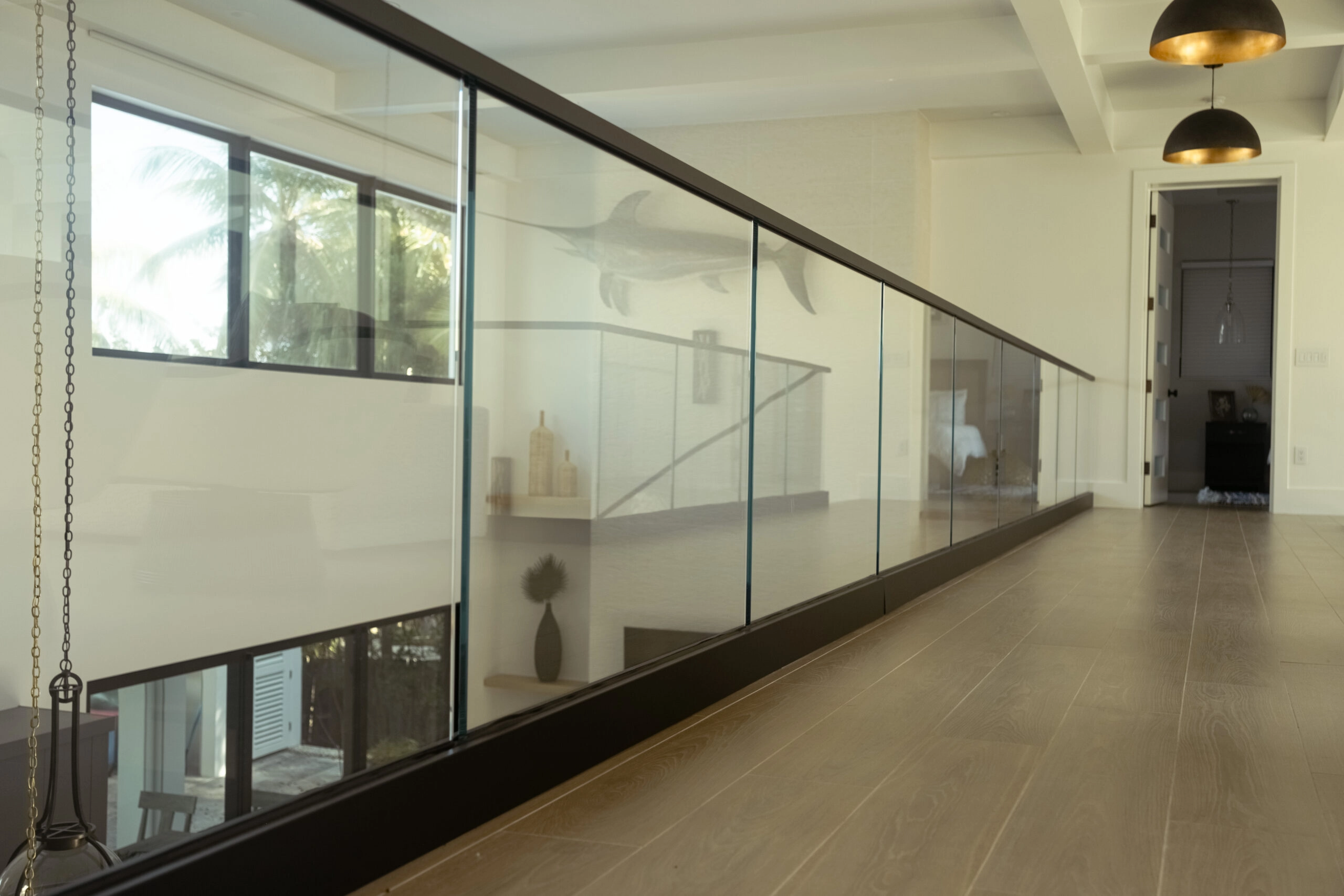
STANDARDS
The standards we test against.
Our test methods follow the procedures prescribed by the bodies that set the rules for railing and guardrail performance. When we run a test, we're measuring against the same standards code officials, architects, and inspectors rely on.
IRC / IBC
ICC-ES
ASTM E935 / E985
ANSI Z97.1
CPSC 16 CFR 1201
THE LAB
Inside the Viewrail test lab.
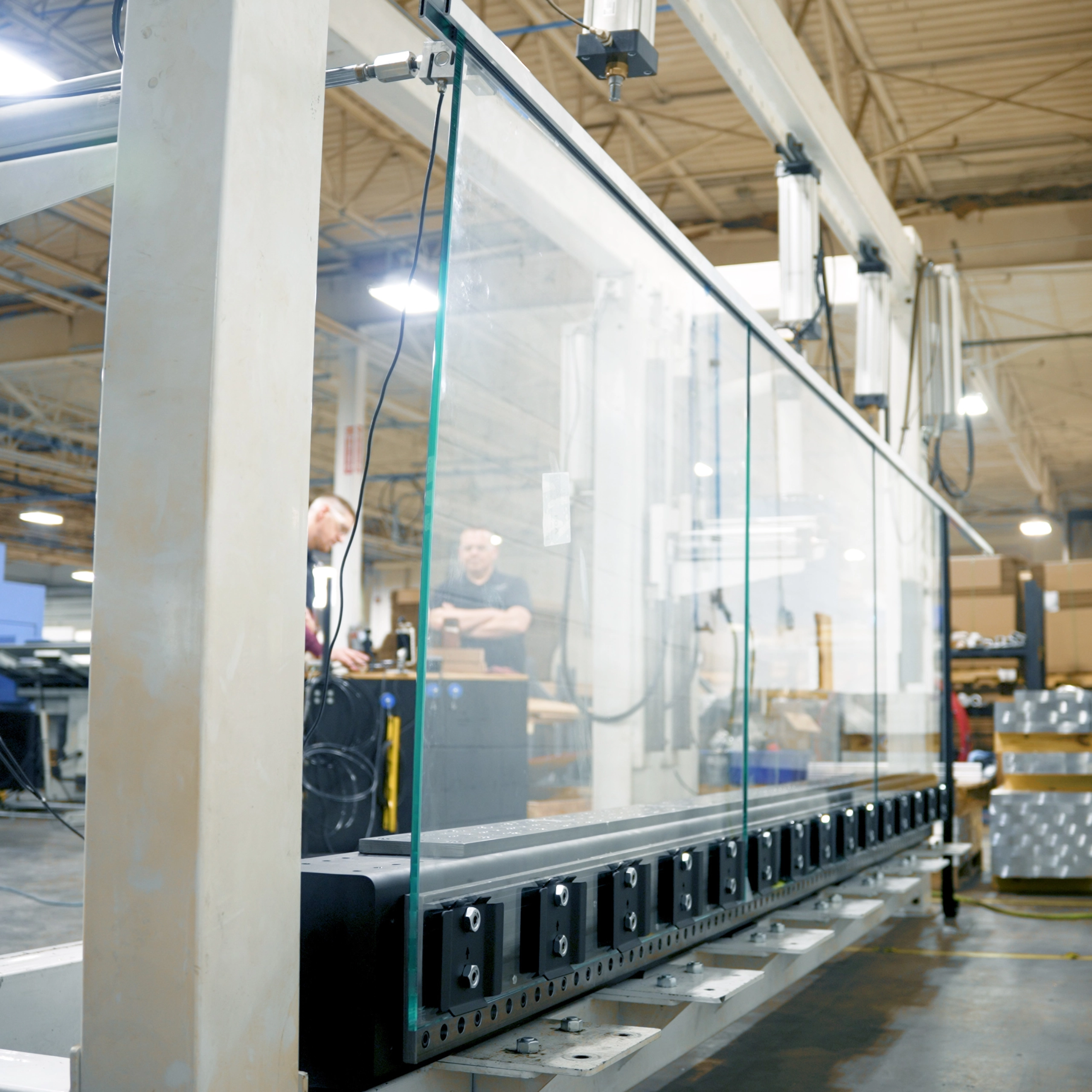
We built our testing capability the same way we build our products: in-house, in Goshen, Indiana, with equipment we control end-to-end.
01
A custom multi-axis apparatus
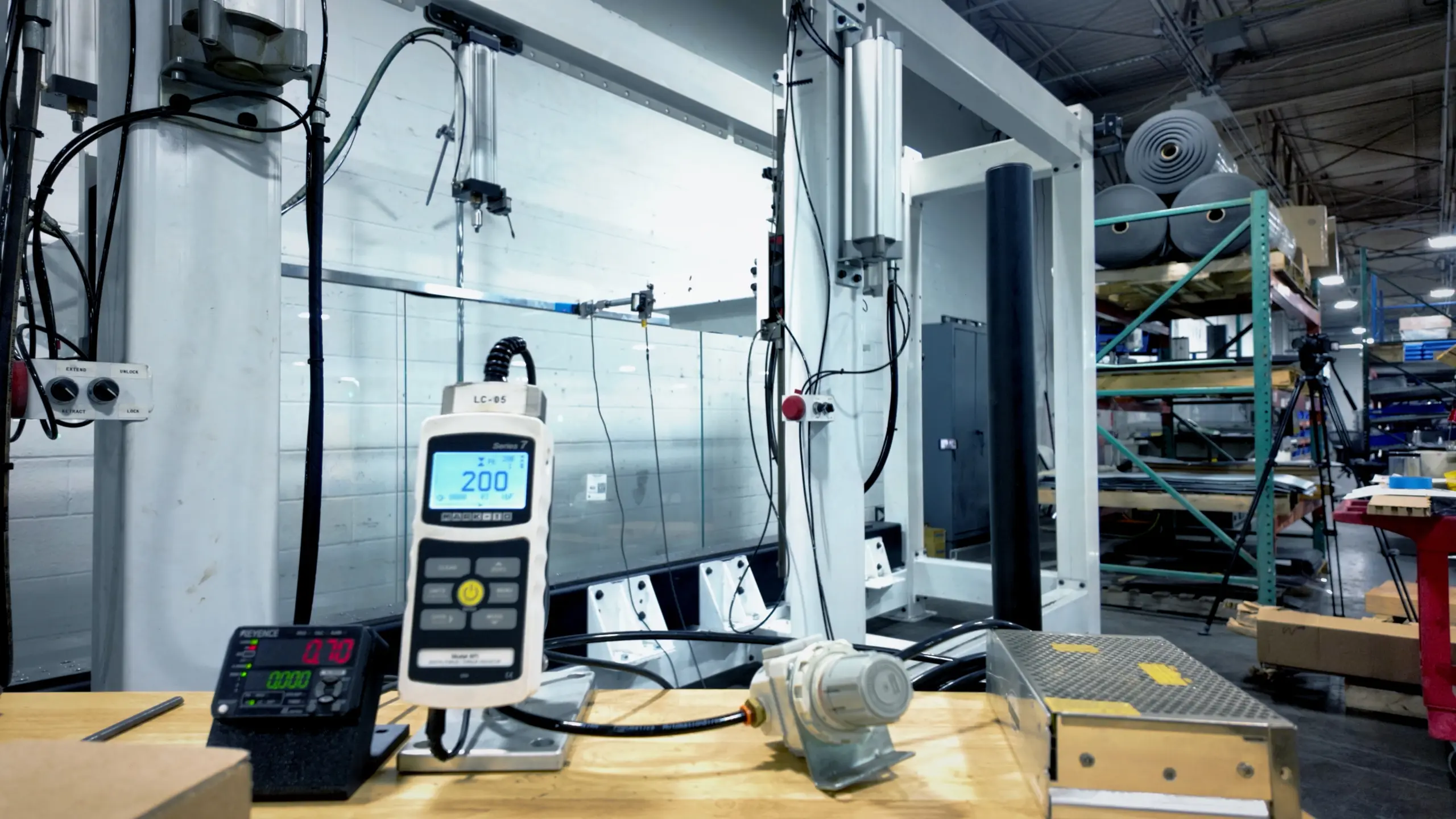
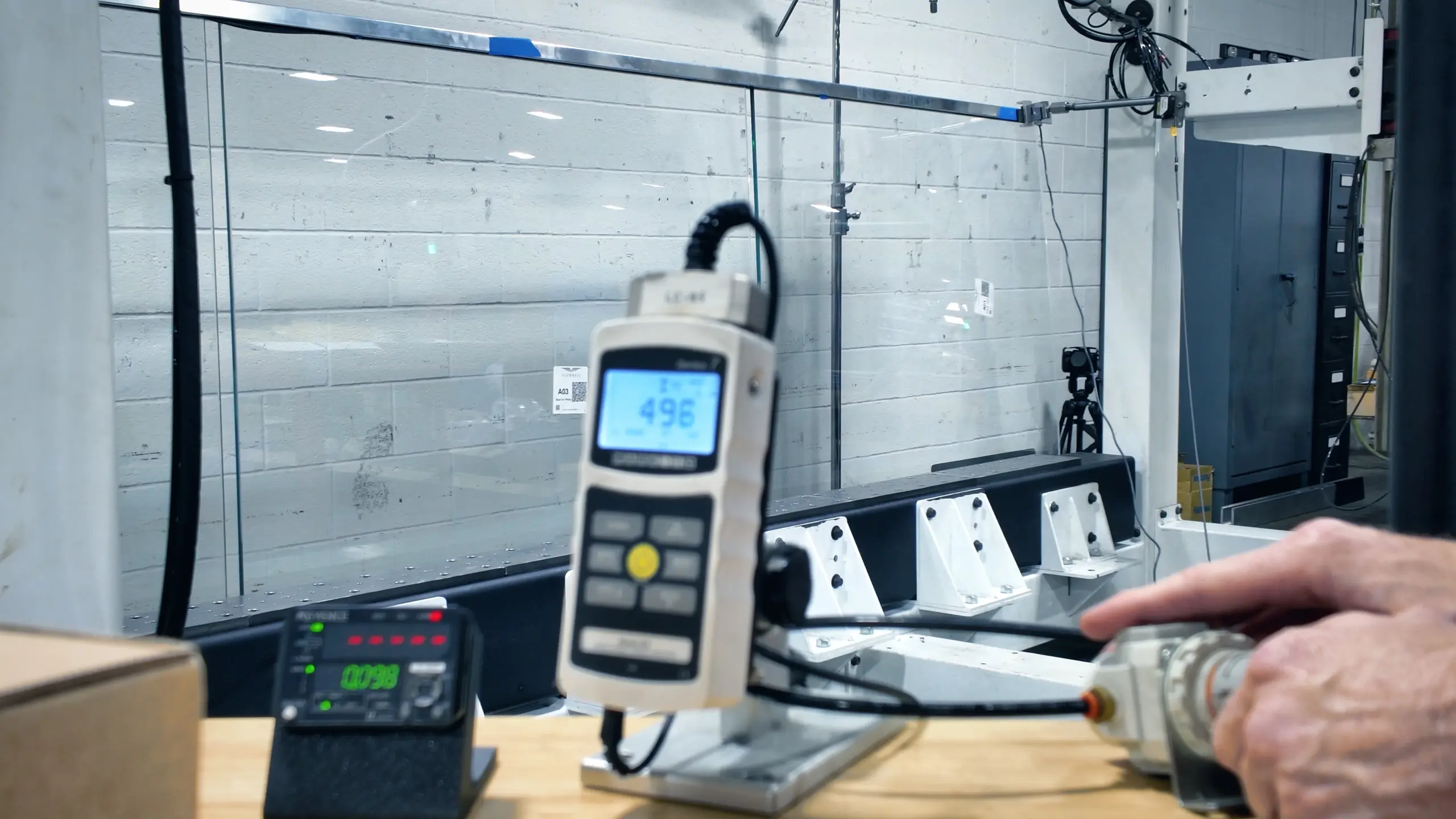
Designed and fabricated here a year ago. Lets us apply pressure in any direction on a full railing system, reproducing the real-world ways someone leans, falls, or pushes against a guard.
02
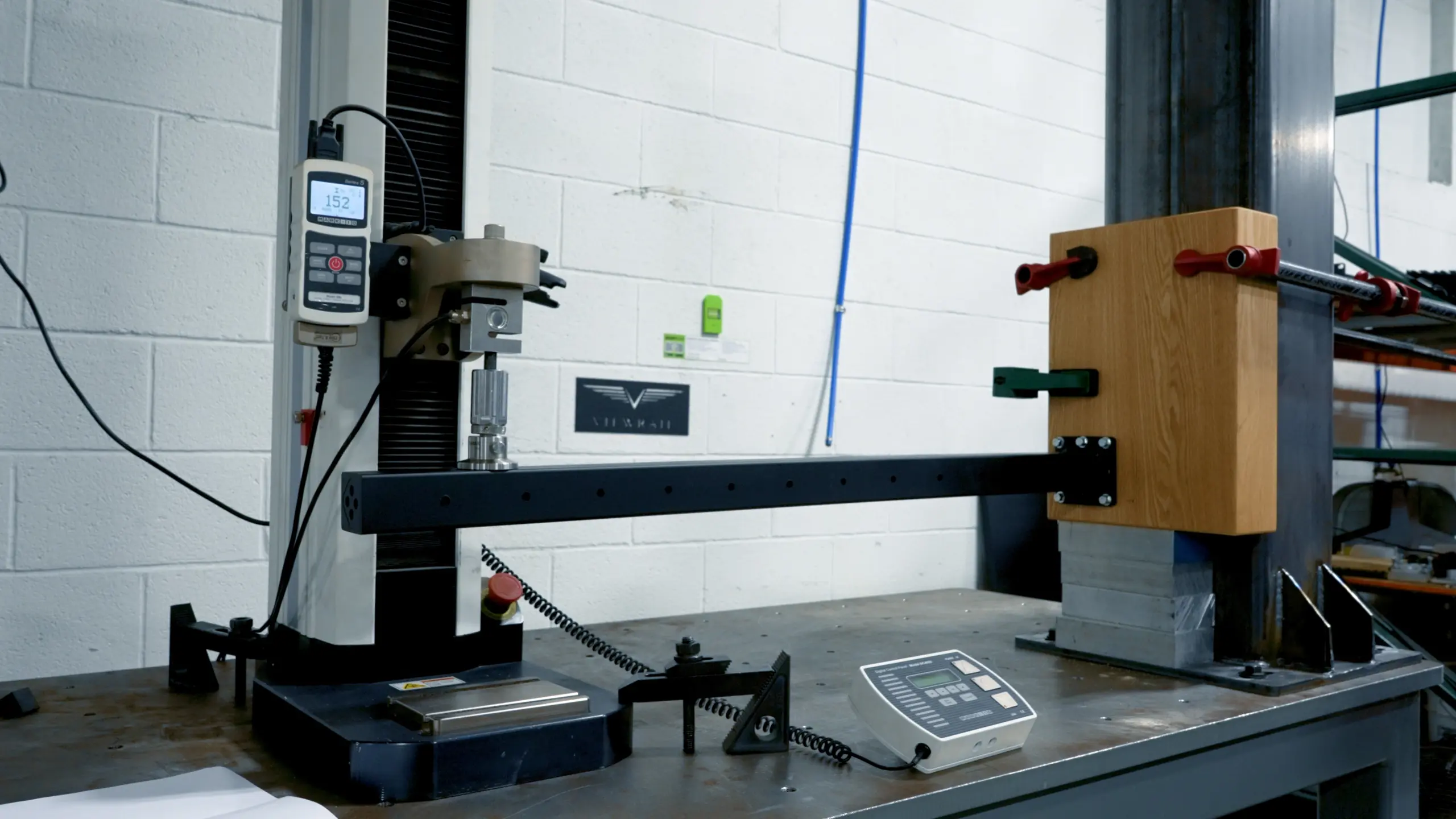
Mark-10 force measurement
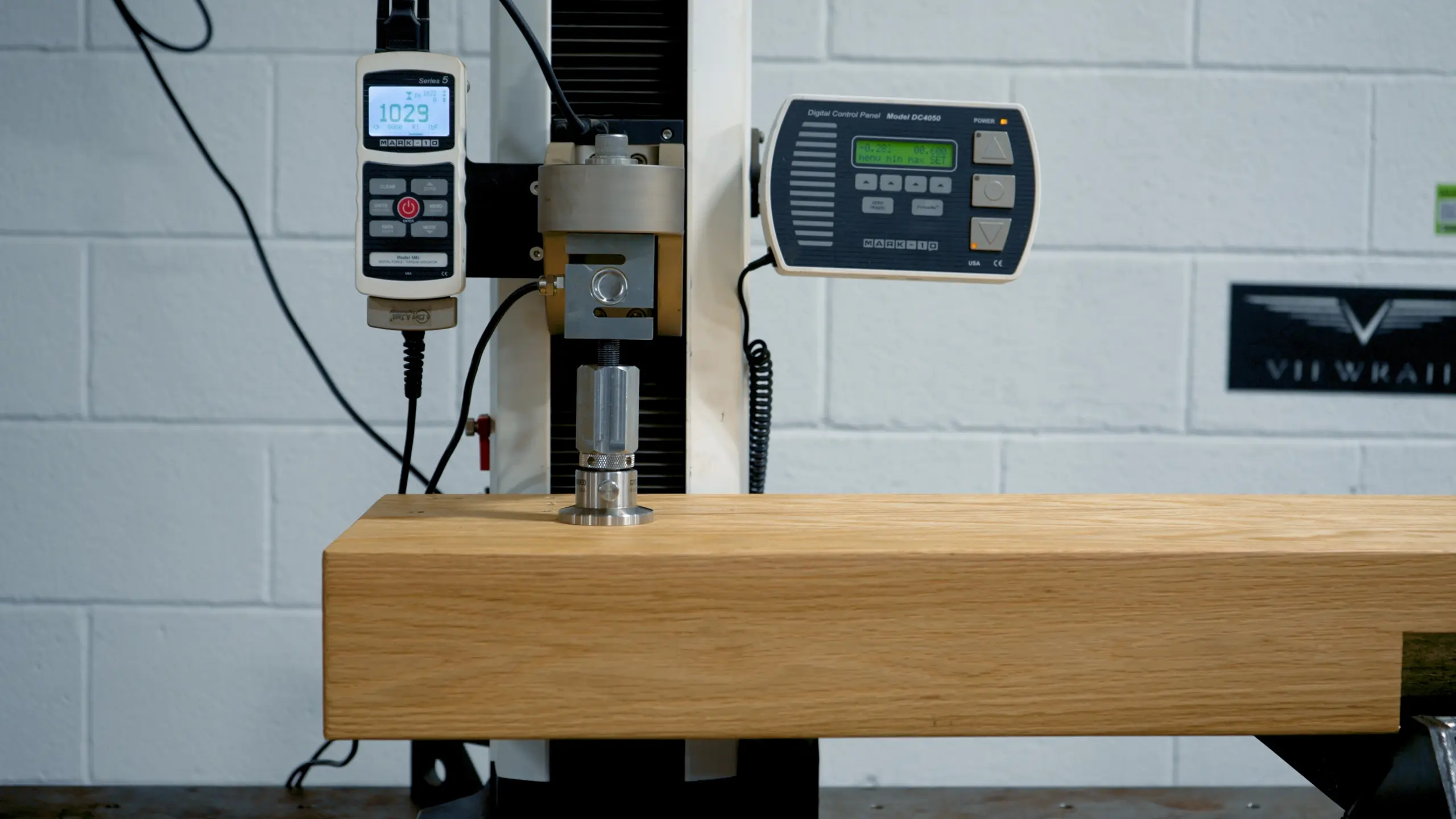
Calibrated load cells tell us exactly how much force we're applying. A laser measurement device captures deflection in real time.
Sample sizes, not single units
When we run a tread test, we run ten of them. We're not looking for a hero result. We're looking for consistency.
The Tests
Three tests. Same standard.
The clearest way to show how we test is to show you. Below are three of the tests we run on Viewrail systems: what we test, how we test, and what we found.
The Tread Test
Proving the stair holds, even at the worst-case loading point.
What we test
Whether a maximum-size tread stays solidly anchored to its bracket when force is applied at its most vulnerable point: the far outer edge, where fasteners are most likely to pull.
How we test it
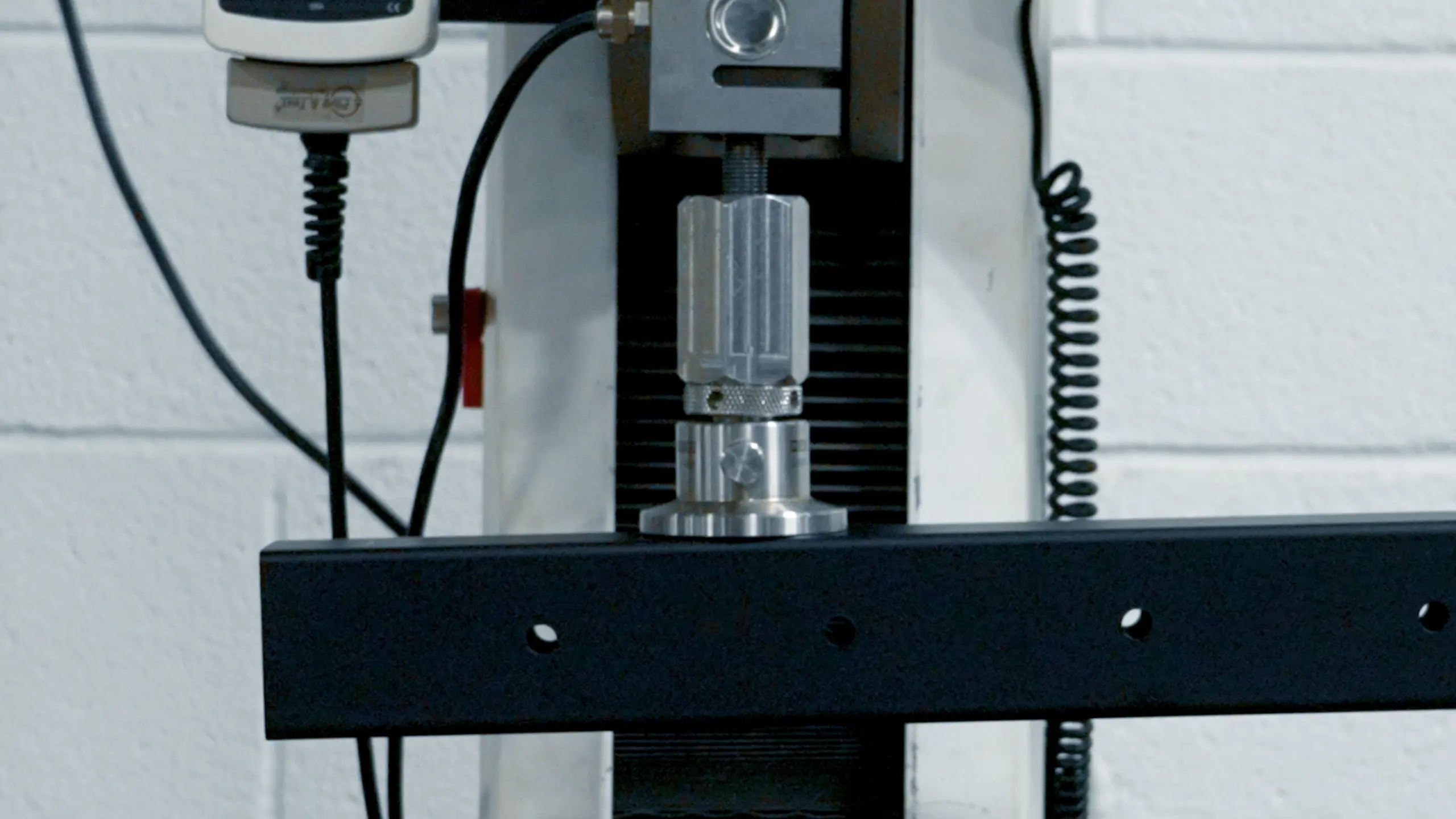
We mount a tread directly to one of our fixed-angle brackets, the same bracket that becomes part of our mono stringer on a customer's job. The tread is built to the maximum size we offer, because if it works there, it works everywhere smaller. We then apply pressure at the extreme outer edge, where the leverage on the fasteners is highest. The Mark-10 measures the force going in. A laser device measures deflection coming out.
What we found
| Test / Standard | Result |
|---|---|
| Code minimum (IBC) | 300 lb concentrated load |
| Mark-10 ceiling | 1,500 lb |
| Result, every sample | Maxed the machine, no fastener withdrawal |
| Third-party (ICC-NTA) | Over 2,000 lb to pull a tread off its bracket |
The takeaway
Five times the code minimum, with zero failures across ten treads. The tread doesn't just meet the load, it meets it the same way, every time.
The Railing Post Test
Proving the post stays put when someone leans, pushes, or falls.
What we test
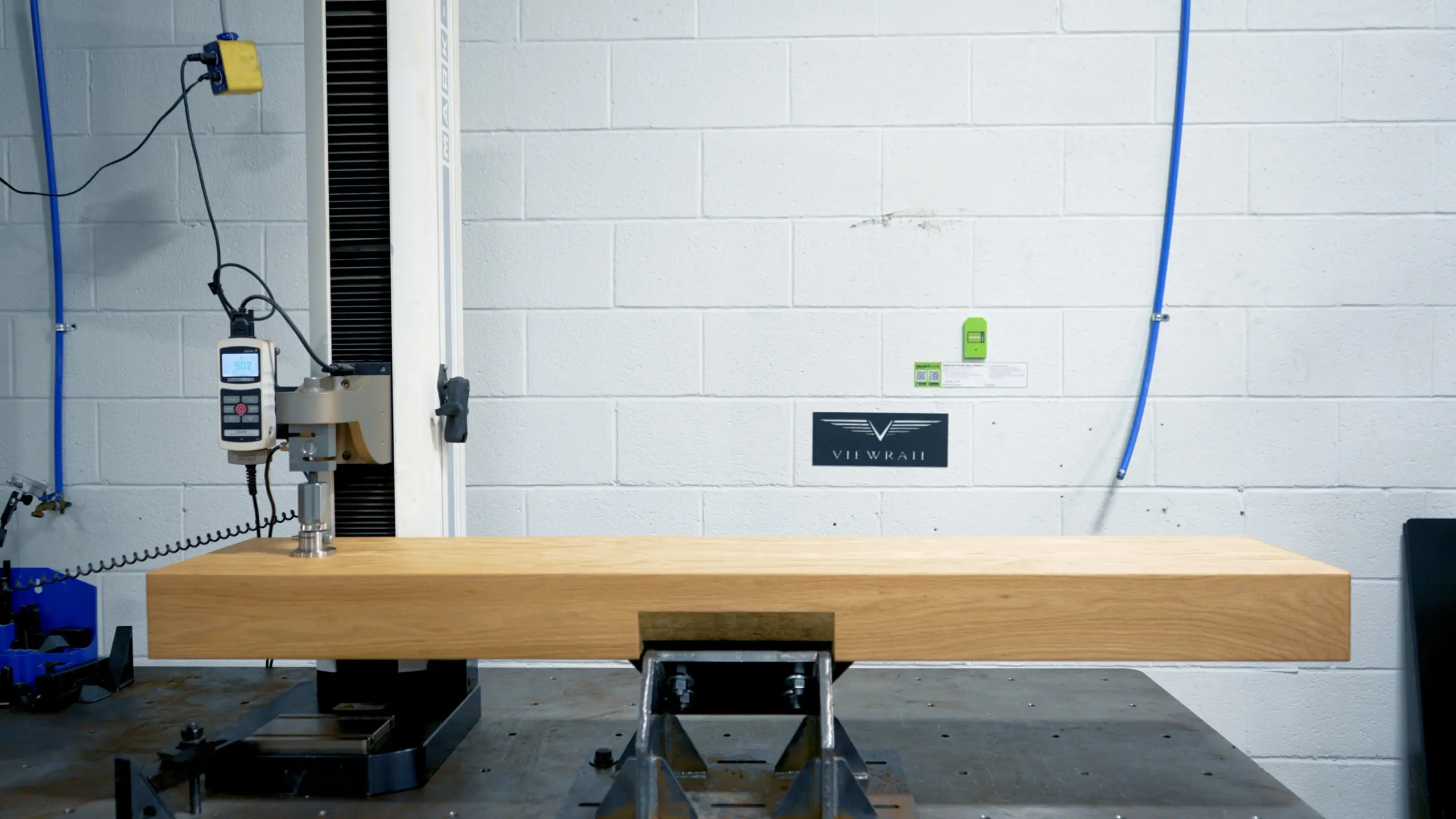
What happens when someone puts their weight on the top of a railing post, the way a hand naturally lands when going up the stairs, or the way a body lands when someone slips and falls into the rail.
How we test it
We mount a post to a representative tread block, replicating the way it would be installed on a real job. Then we apply force at the very top of the post, where a hand or shoulder would make contact. As we load it, we watch three things: the post itself, the tread it's anchored to, and every fastener in between.
What we found
| Test / Standard | Result |
|---|---|
| Code minimum (IBC) | 200 lb concentrated force, any direction |
| Result, every sample | Far exceeded. No withdrawal |
| Condition after test | Tread intact. Fasteners seated. No movement. |
The takeaway
Code asks the post to survive a single 200-lb push. We push much harder than that, on a single post (the worst case) and the system holds.
The Full-System Glass Railing Test
Testing entire systems, not just parts — the way ASTM, ANSI, and ICC require.
What we test
Most railing testing focuses on individual components. We test the entire system, fully assembled, the way you'll actually install and use it. That's the standard ASTM, ANSI, and ICC prescribe and it's our internal standard whenever we develop a new system or change an existing one.
The system shown here is our Hidden Side Mount glass railing.
How we test it
We use the same custom apparatus, with the load cell and laser deflection device. Two scenarios: one realistic, one deliberately unfair.
Scenario 1 — Center push (realistic worst-case)
Force applied at the top middle of a glass panel.
| Test / Standard | Result |
|---|---|
| Code minimum | 200 lb |
| Test stopped at | 500 lb (2.5× safety factor) |
| Result | System fully intact. We stopped the test. |
Scenario 2 — Unsupported corner (geometric worst case)
Force at the unsupported edge at the very end of the system. The weakest point in any glass railing, anywhere.
| Test / Standard | Result |
|---|---|
| Code minimum | 200 lb |
| Test stopped at | 500 lb (2.5× safety factor) |
| Result | Glass finally failed under torsion at the geometrically weakest point. |
The takeaway
Component testing tells you a part is strong. System testing tells you the install is safe. We test the install, even at the corner where physics is least on our side, and the system holds well past code.
GOING BEYOND
The full inventory of validation work.
The three tests above are a window into how we work. Other validation we run:
Certifications
Independent. Verified.
Our internal testing is rigorous, but we don't ask you to take our word for it. Where it counts most, we've earned independent certification from the industry's most trusted authority.
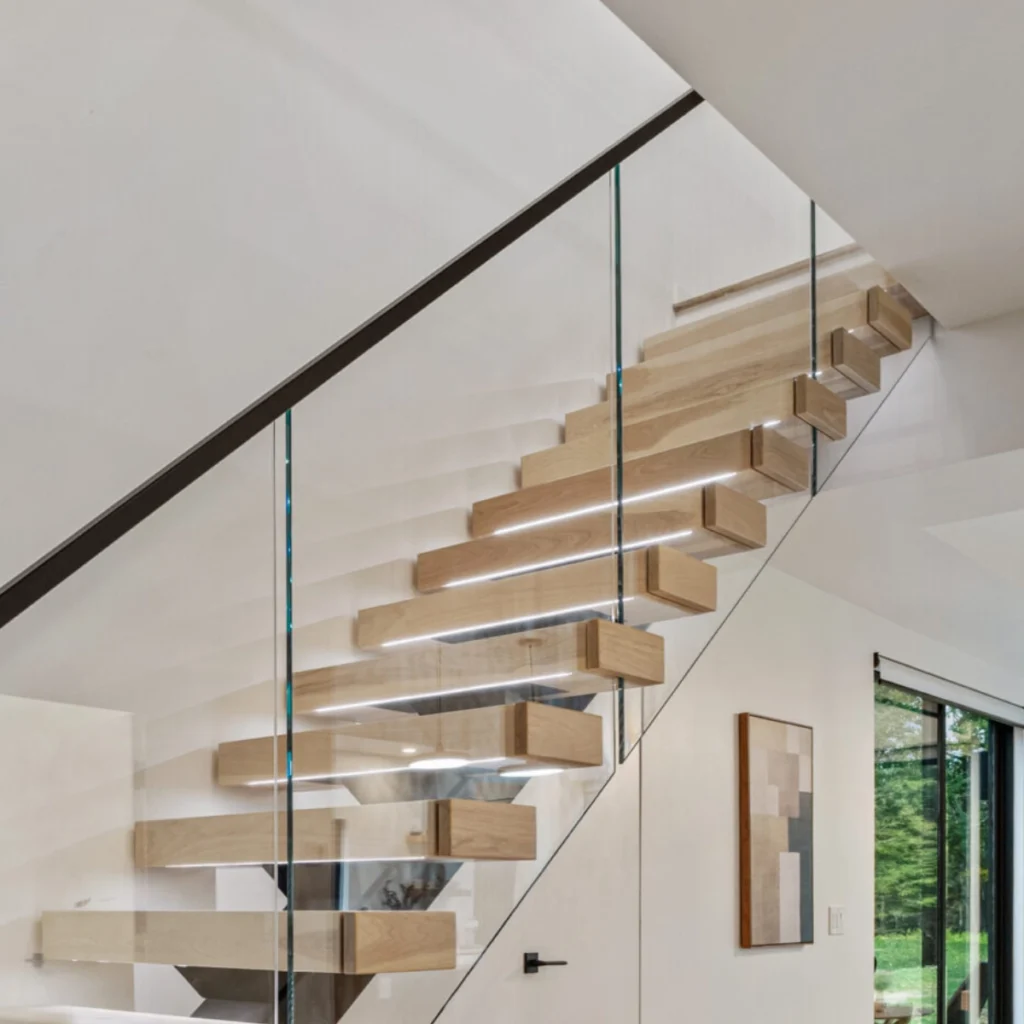
ICC-ES ESR-4797
2025–2027
FLIGHT Floating Stair System
Viewrail was the first company in the United States to earn ICC-ES certification for a floating stair system. ICC-ES Evaluation Reports are the most widely accepted documentation for code compliance, used by building officials, architects, contractors, and inspectors nationwide.
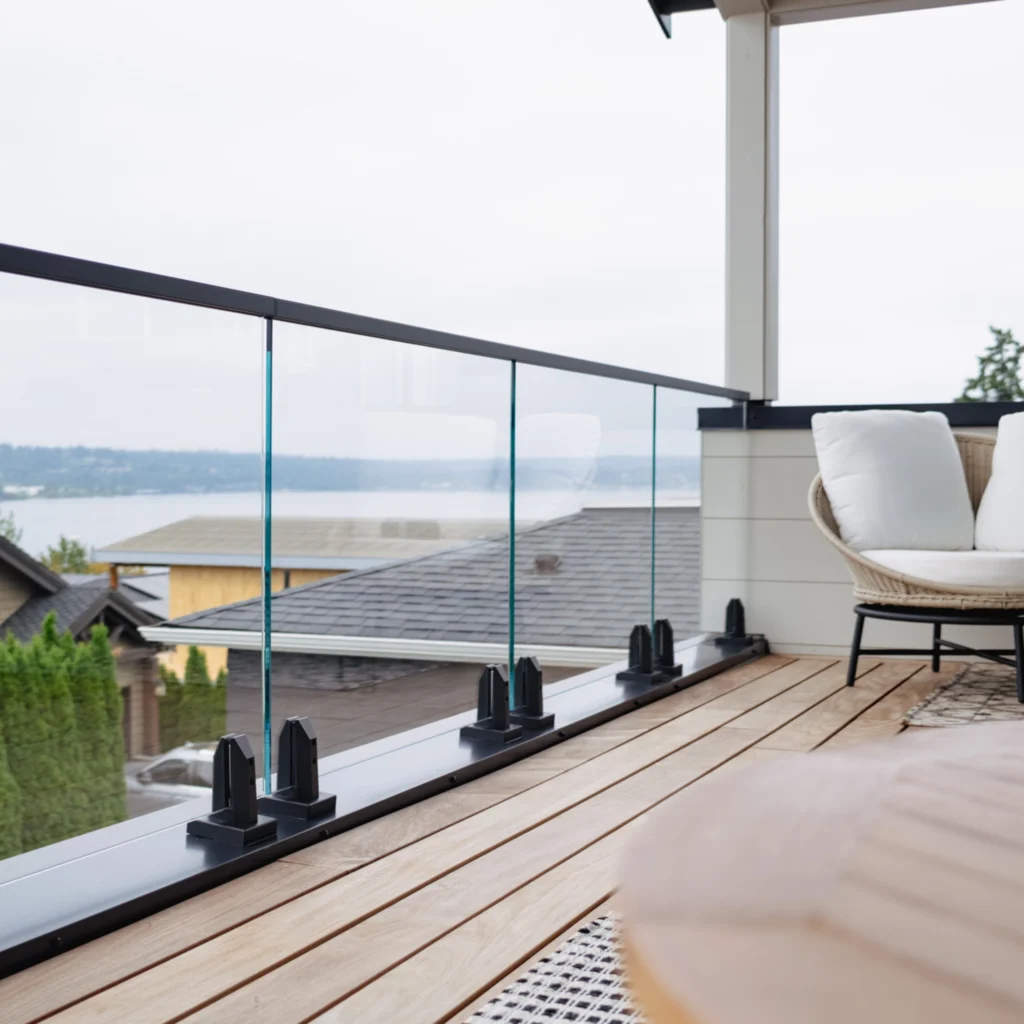
ICC-ES ESR-4799
2025–2027
Glass Railing Hardware
Covers our Base Rail, Surface Talons, Standoff Pins, and accompanying glass railing hardware.
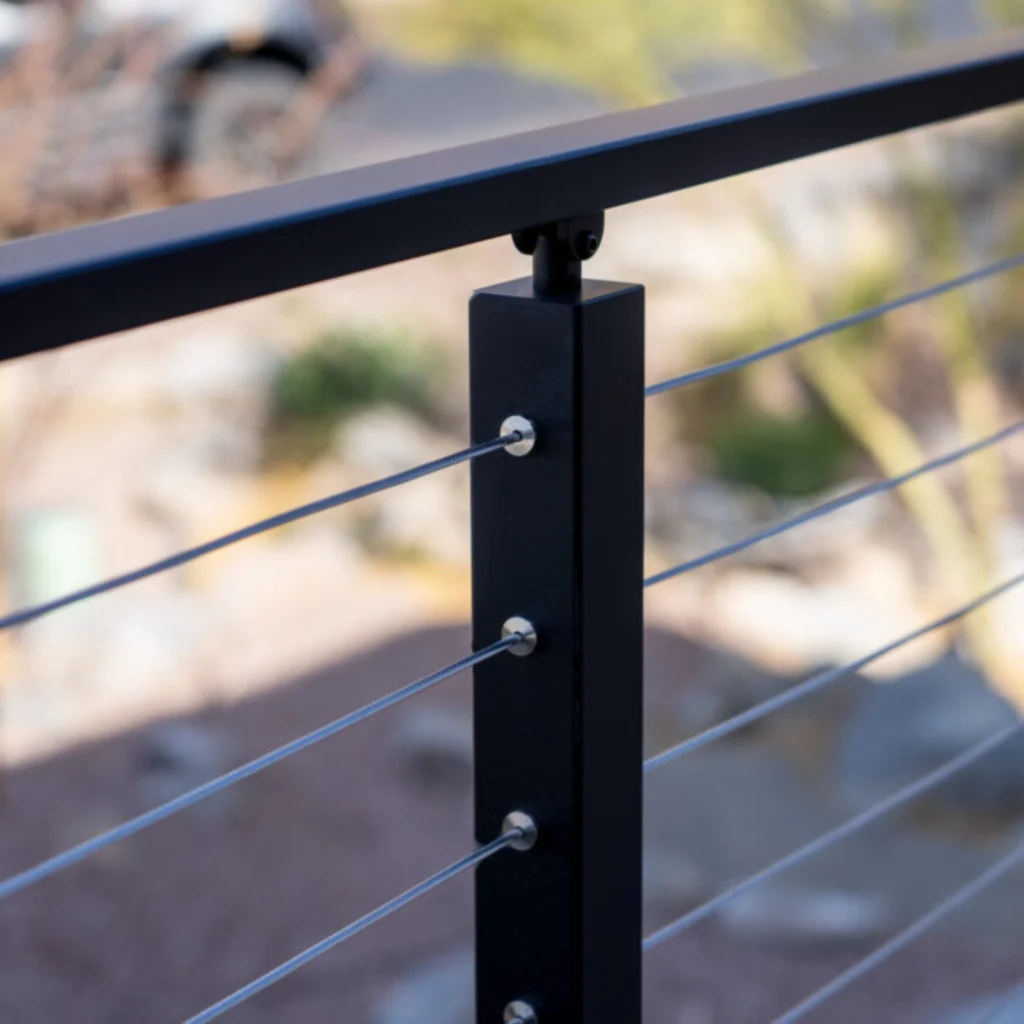
ICC-ES ESR-4798
2025–2027
Cable and Rod Infill Systems
When used with our Surface Mounted Posts and Universal Top metal handrail.
Need documentation for your permit set?
We share engineering data, ESRs, and spec sheets directly with your design and review team.