.webp)
%20(1).webp)
.webp)
.webp)
.webp)
.webp)
%20(1).webp)
.webp)
.webp)
.webp)
.webp)
.webp)
.webp)
%20(1).webp)
.webp)
.webp)
.webp)
.webp)
Glass Tint Options
Clear
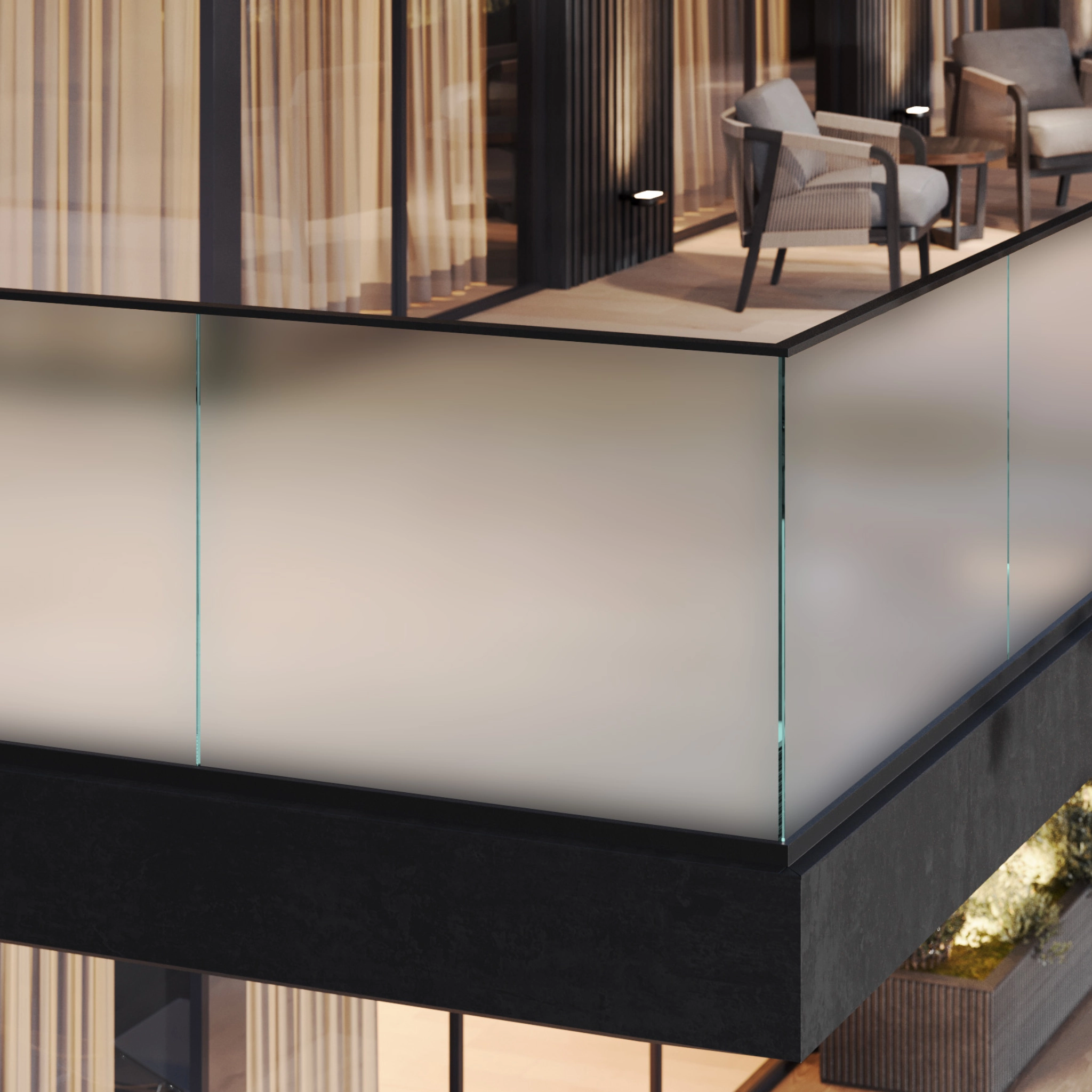
Frosted
Solar Bronze
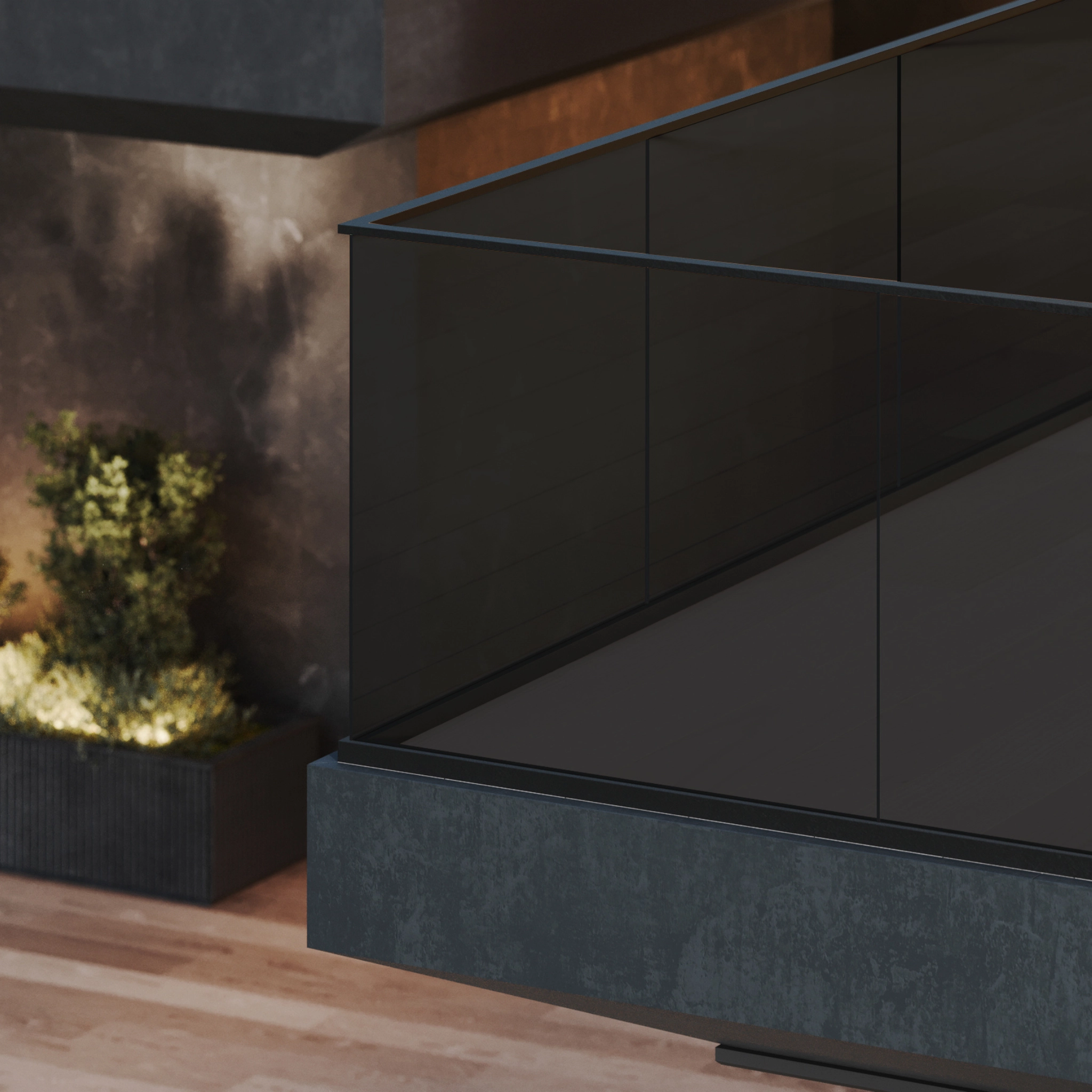
Solar Gray
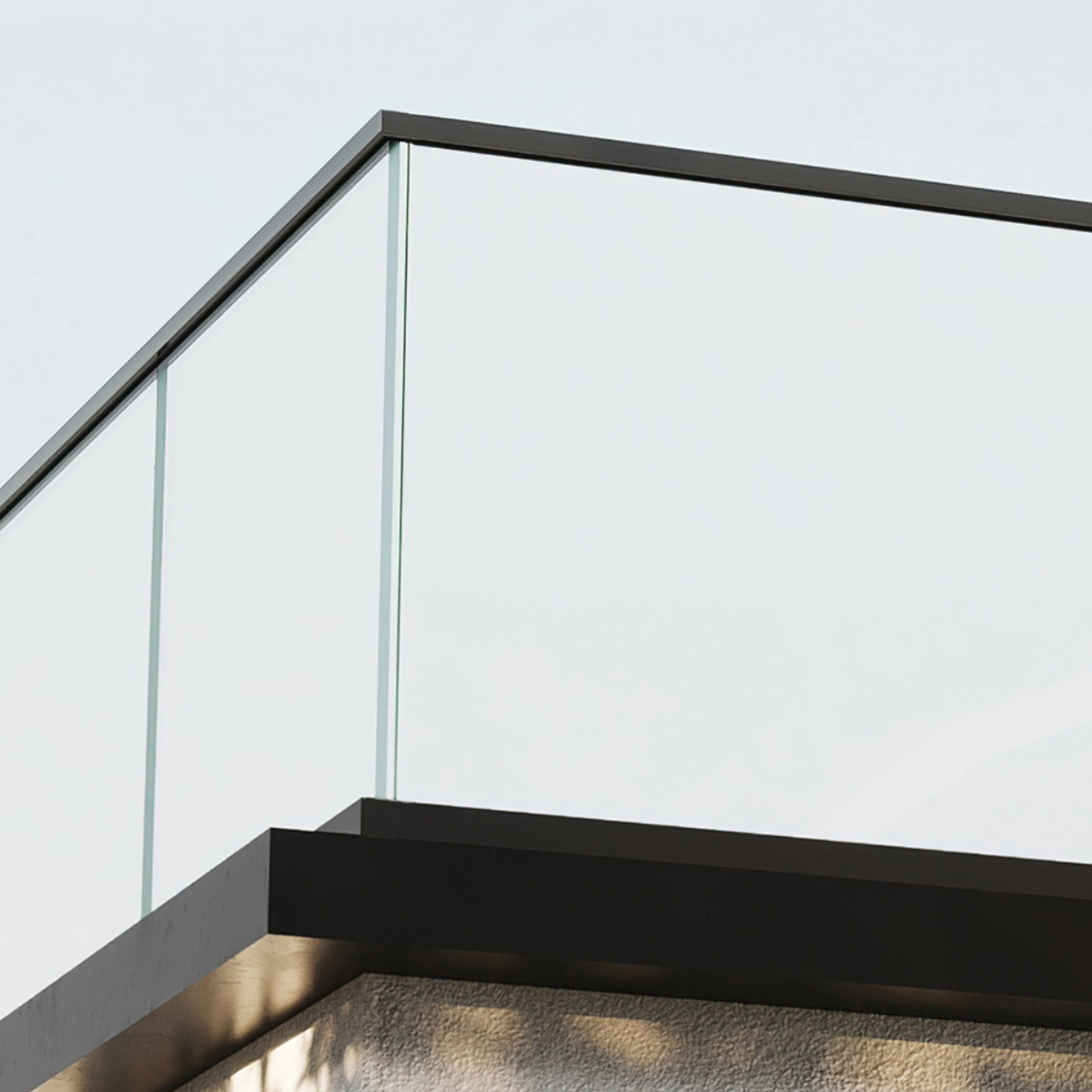
Ultra Clear
Clear and Ultra Clear, Measured
Clear and Ultra Clear, Measured
Clear and Ultra Clear, Measured
Clear and Ultra Clear, Measured
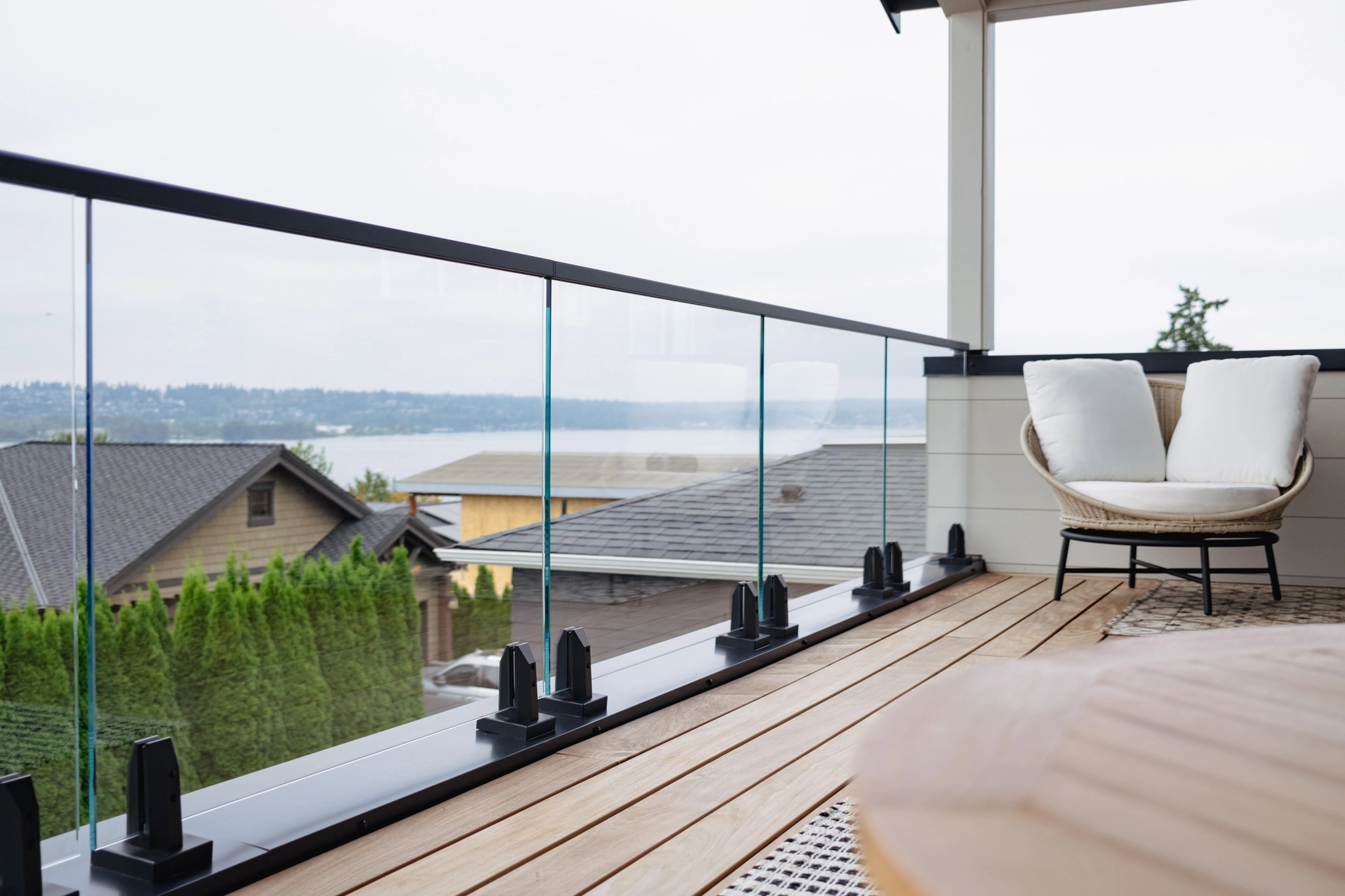
Both transparent panel types are sourced as large format panels from Vitro Architectural Glass, and both are cut, tempered, laminated and fabricated here. Clear uses Vitro's standard soda-lime float glass. Ultra Clear uses their Starphire low-iron glass. What changes is color. Tensile strength, density, hardness and thermal behavior are identical, which is why an upgrade never changes the hardware, the engineering or the install.
Tempered and Laminated, Side by Side
Tempered and Laminated, Side by Side
Tempered and Laminated, Side by Side
Tempered and Laminated, Side by Side
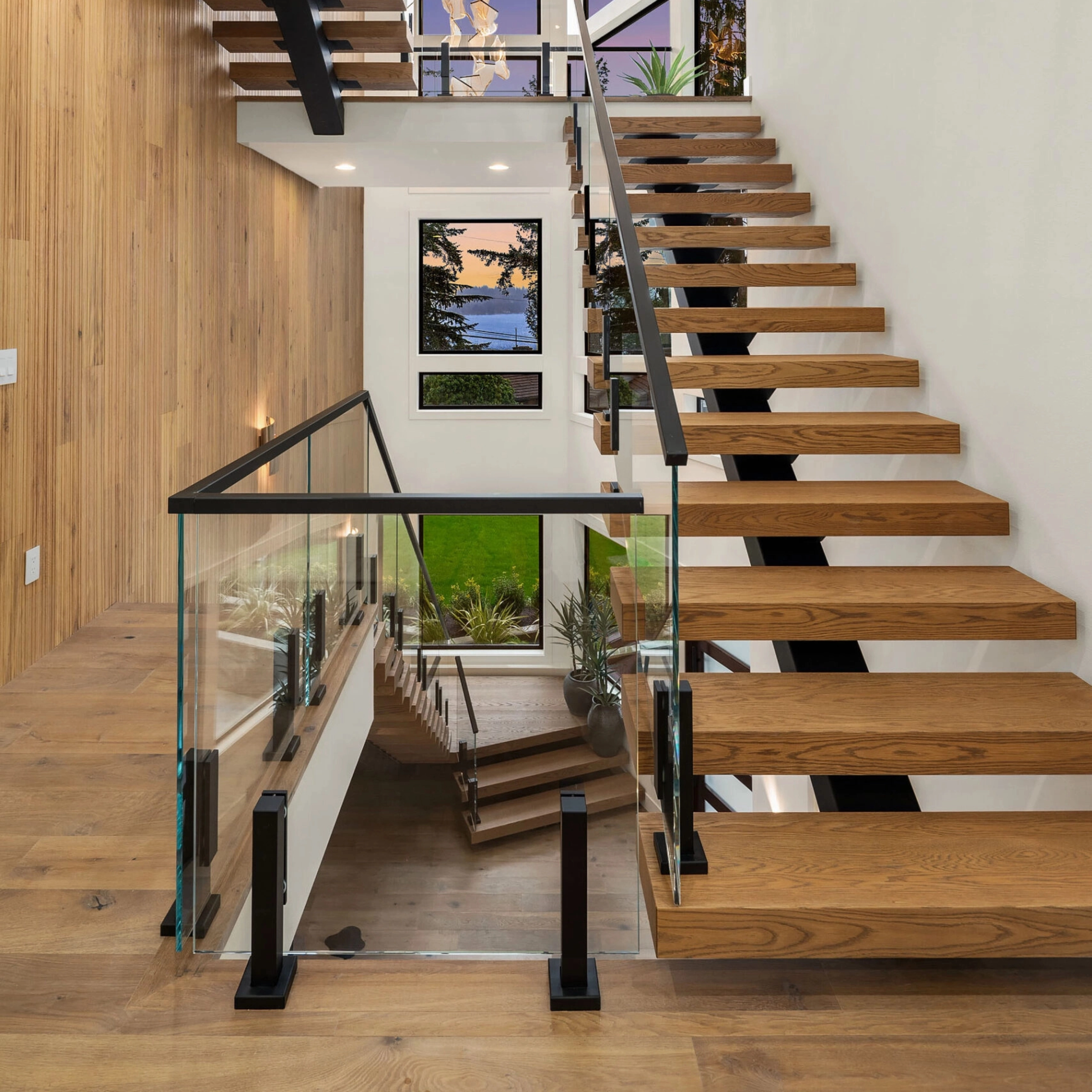
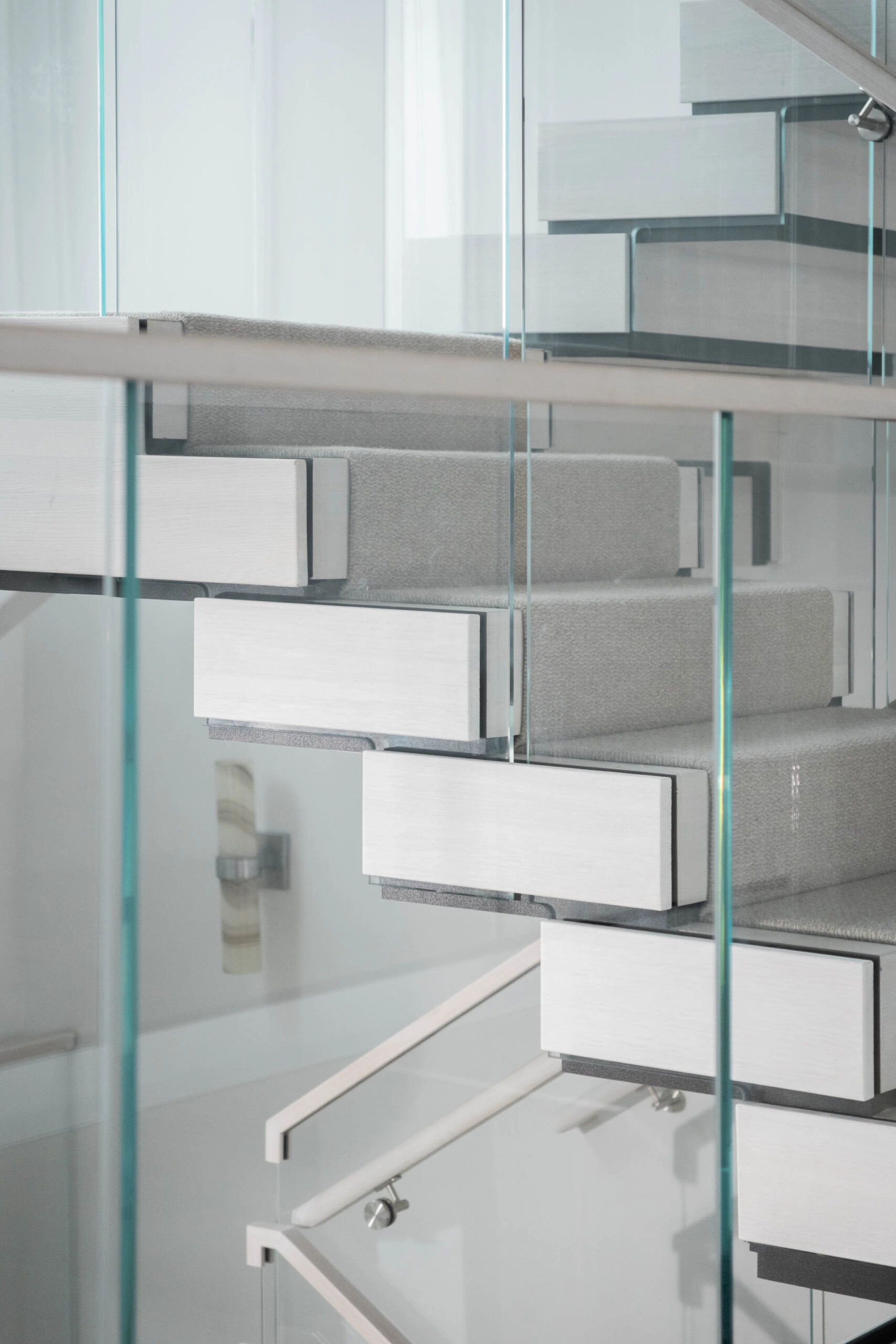
Both are safety glass and both are made here. Which one your project takes is usually settled by code rather than preference. Your engineering drawings call the exact type and thickness for your system, height, span, and location.

- Water beads and runs off, taking dirt and minerals with it
- You clean less often, and faster when you do
- Resists up to 92 percent of scratches
- Available on every glass type we make
Frequently Asked Questions
Do I need a cap rail on the stair?
Stairs require a graspable handrail, so you'll need either a graspable cap rail on the glass or a separate wall-mounted handrail kept continuous across flights and landings. Any of our glass systems can take a metal or wood top cap, and on a FLIGHT stair the wood is matched to your tread finish.
How wide can my glass panels be?
Panels run from 12 to 48 inches wide and 12 to 42 inches tall. We can manufacture wider, but 48 inches is what we've tested to. Your shop drawings will give exact dimensions for every opening, since width shifts with glass type and code.
What size panels do Standoff Pins support?
Up to 48 inches wide and 42 inches tall. Pin centers sit at least four inches apart and six inches in from the glass edge, and the fascia needs to be at least 7.25 inches deep with four inches of solid blocking behind it. Final spans get set during engineering.
Is there a minimum panel size?
Panels start at four inches wide and run up to 48 inches, the same tested maximum as our other glass systems, with height to 42 inches. Your drawings will show exact sizes once glass type, exposure and load category are settled.
How many spigots does each panel need?
Two per panel on residential projects under the IRC, which carries a panel up to four feet. Commercial projects under the IBC need three or more, plus a continuous top cap. Talons sit four inches in from the glass edge, and your drawings will show the exact count and spacing for each opening.
What glass do Ascend Talons hold?
Half-inch tempered or 9/16 inch laminated. Panels run up to 48 inches wide and 42 inches tall, with talons set four inches in from the glass edge. Ascend Talons come in powder-coated aluminum or brushed 2205 stainless and work on angled runs as well as level ones.
What glass do Barrier Posts use?
Extra-thick glass in half-inch tempered or 9/16 inch laminated, up to 48 inches wide and 42 inches tall. Posts come in aluminum, 304 stainless or 2205 stainless, and all the glass hardware is built to withstand 2.5 times what code requires.
Whose responsibility is code compliance?
Ours is to build to national code requirements, and several of our systems carry ICC-ES evaluation reports. Yours is to confirm what your specific jurisdiction requires. Local building code always supersedes anything we suggest, and we can't be liable for an order that doesn't comply with local requirements. Tell us which code your jurisdiction has adopted and we'll design to it.
How thick is the glass on Hidden Side Mount?
Three options: half-inch monolithic tempered, 9/16 inch laminated, and 3/4 inch laminated. Starphire low iron is available in all three. Solar Gray comes in the first two, with Solar Bronze and Frosted available in the 9/16 laminated.
How many print revisions do I get?
Two after the first set. Beyond that, design and engineering time is billed at $150 per hour. Custom stair and railing orders need your review and signature on final prints before anything goes into production. Nothing is manufactured against unapproved drawings.
Tempered or laminated, what's the difference?
Tempered glass is heat treated for strength, and if it breaks it granulates into small, blunt pieces. Laminated glass bonds two tempered panes with an interlayer so the panel holds together if it breaks, and it adds sound and UV protection. Both are safety glass. Which one suits your project comes down to code, span and design, and each system lists the thicknesses it allows.
What glass thicknesses are available?
It varies by system and span. Half-inch tempered and 9/16 inch laminated cover most residential work. Three-quarter inch laminated is available on Base Rail and Hidden Side Mount for commercial and high wind conditions. We'll recommend a spec for your layout, but confirm it against your local code before you order.
How does glass handle wind, snow and crowd loads?
When specified and installed to your drawings, our systems are engineered for the applicable design loads, and all glass hardware is built to withstand 2.5 times what code requires. For unusual wind exposure, heavy snow drift or assembly occupancies, tell us early so we can size the hardware and glass accordingly.
Do I need a cap rail?
Often recommended, sometimes required. A cap rail adds stiffness and protects the glass edge, and many commercial or high load conditions require a continuous top cap. Stairs always need a graspable handrail, either a cap rail on the glass or a separate wall-mounted rail kept continuous across flights and landings. Check your local code for what your project requires.
Is Viewrail glass third-party certified?
Every Viewrail glass system is designed as a complete assembly, meaning glass, hardware, posts or base, and anchors together, to meet or exceed IRC and IBC guard and handrail loads. A select number of systems carry ICC Evaluation Service Reports (ESRs), including Base Rail, Talon and Standoff Pins. Because we cut, temper, laminate and fabricate glass in-house, we test panels well beyond minimum standards.
What can I mount glass railing to?
Concrete, engineered flooring, hardwood and composite decking all work. Beyond the glass itself, the strength of the structure you mount to is the single biggest factor in glass safety, so your drawings call out substrate requirements and whether to through-bolt or lag. Every system needs at least four inches of solid blocking behind the mounting surface.
Can I use glass railing on a commercial project?
Yes, with the right system. Some of our glass systems are evaluated for commercial work and some are residential only, so it depends on what you're building. Tell us the project and the code your jurisdiction has adopted, and we'll point you to the systems that fit.
Will a side-mounted system work on my deck?
It depends on your deck. Side-mounted systems need somewhere between six and 7.5 inches of fascia depending on which one you choose, plus at least four inches of solid blocking behind it, either triple 2X or double LVL. Overhang tolerances are tight, so send us your deck section early and we'll tell you what will work.
Do Viewrail systems meet building code?
Our systems are engineered to meet or exceed the guard and handrail requirements that apply to your project, and several carry ICC Evaluation Service Reports (ESRs). Final authority always rests with your local building official, so tell us which code your jurisdiction has adopted and we'll design to it and share the engineering data with your submittal.
Do you provide drawings for permits and inspections?
Yes. We supply coordinated shop drawings for your project, and your rep can include calculation packages and state-specific documentation when your local building department requires them.
What should I include on drawings?
The more you can send up front, the faster design moves. Most useful is a typical plan set, with your markups on it if you have them. Beyond that:
- Project address and the code edition your jurisdiction has adopted
- Where guards are needed and at what heights
- Substrate at mounting locations, plus any blocking already planned
- Layout targets, corners and terminations
- Finish selections for anything visible
If all you have is an idea, a few photos and some measurements are enough to start.
Where do I find BIM files, spec sheets and ICC reports?
In the Resource Center. Revit models for FLIGHT and railing systems are on the BIM Files page, and the current ICC Evaluation Service Reports for floating stairs, cable and rod railing, and glass railing are on the ICC Certifications page. Product spec sheets are linked from each system page. If you need something that isn't posted, your rep can send it.
Do you design to IRC or IBC?
Either. Residential projects are usually reviewed under the IRC and commercial under the IBC, and the two differ on guard height, handrail rules and loads. Tell us which code and edition your jurisdiction has adopted and we design to it. Several of our systems carry ICC evaluation reports, and where a project needs commercial-rated components, such as a continuous top cap on glass, we'll call that out in the drawings.
Is Vedera available without FLIGHT?
No. Vedera is engineered specifically for Viewrail FLIGHT stairs and integrates through concealed hardware inside the treads, so it can't be fitted to another stair. Hidden Side Mount is the closest comparable option on a landing or balcony. Base Rail, Standoff Pins and Talons get you a similar frameless feel.
How far off the wall do the pins hold the glass?
Each pin is just under two inches across and holds the glass 1.5 inches off the mounting surface, which is what gives the panels their floating look. That offset stays consistent across flights, landings and balconies.
Can I use Hidden Side Mount on stairs?
Hidden Side Mount is built for level runs and landings. For a stair flight, Vedera gives a similar look on FLIGHT systems, and Ascend Talons are the strong alternative on other stairs.
Can I use Talon Spigots on stairs?
Standard Talons are built for level runs. Ascend Talons are the stair version, and we usually pair the two on a project that has both flights and landings.
What is Recessed Base Rail?
The same system, set below your floor rather than on top of it. The base sits flush with your finished surface and gets wrapped as needed, so the glass appears to rise straight out of the floor with no visible shoe. It takes planning around recess depth, drainage and floor build-up, so bring it up early.
Why is there no handrail on Barrier Posts?
By design. Barrier Posts are a minimalist guard for level areas like decks, balconies and overlooks, where the point is an unobstructed edge. Because there's no handrail, it isn't the right choice for a stair flight.
How is Vedera different from Standoff Pins on stairs?
Vedera hides its hardware inside the treads for a look with no posts and no shoe. Standoff Pins mount to the side of the stair itself, without the hidden tread end cap Vedera uses. On a FLIGHT stair, Vedera is the more integrated of the two because the glass becomes a structural part of the staircase.
Do I need to supply the cover cladding?
You can, or we can. The decorative cover that conceals the channel can be sourced on site with your finish carpenter, or ordered from us in wood or metal. The channel itself ships in four, eight and sixteen foot sections and needs at least four inches of blocking behind it, either triple 2X or double LVL.
Can I mix glass systems across stairs and landings?
Yes, and many projects do. Blending systems lets you match structure and budget run by run while keeping one look, as long as the glass and handrail finish stay consistent. Vedera on the stair with Base Rail, Hidden Side Mount, Pins or Talons on the level sections is a common pairing.
Which glass system is the most frameless?
Hidden Side Mount and Base Rail show the most glass and the least hardware. Standoff Pins and side-mounted Talons keep walking surfaces clear by moving the hardware to the side of the structure. Talon Spigots and Ascend Talons show more hardware but make the glass appear to float above the surface.
What glass types and tints are available?
Standard Clear glass carries a slight green cast from the iron in it. Ultra Clear, our Starphire low iron option, takes that cast out, and it's the clearest and most popular choice. Solar Gray and Solar Bronze add tint, and Frosted lets light through while keeping privacy. Availability varies slightly by glass thickness, and custom offerings can be ordered on request.
Which handrail profile should I choose?
It comes down to grip requirements and the look you're after. The 6004 has two finger slots and suits commercial projects or any stair needing a dedicated graspable profile. The 6000 Mission and the 6200 are clean rectangular profiles, and the 6084 has a wide top with an inward finger recess. Across profiles, the 2205 stainless options are the ones rated for coastal locations.
What's the difference between a handrail and a top cap?
A handrail is the graspable element you hold going up and down stairs. A top cap, also called a cap rail, ties the panels together so the guard stays put even if one breaks. In many designs the top of the guard doubles as the handrail, as long as it meets handrail usability rules.
What wood species can I choose?
Eight North American hardwoods. Red Oak, White Oak, Quartersawn White Oak, Hard Maple, Hickory, Ash, American Cherry and Walnut. Red Oak, White Oak, Hard Maple, Hickory and Ash take any of our stains as well as a clearcoat. American Cherry, Quartersawn White Oak and Walnut are offered in a clearcoat only, so their natural color carries the run.
What thicknesses and sizes are available?
Standard profiles are 2 inch, 2 1/2 inch, 3 inch, 3 1/2 inch and 4 inch. Common widths run from 36 inches to 72 inches. Depth is set by code before preference: a tread cannot be shallower than 10 inches, and most runs call for more. If you need something outside the standard sizes, the Custom Tread Builder takes an exact length, depth and thickness.
What is a tread return?
A return is extra material on the left or right of the tread body, designed to overhang open space. It is rounded to match the bullnose at the front of the step so the edge reads as finished rather than cut.
Each return is 1 1/4 inches wide and sits outside the tread width, not inside it. A 36 inch tread with returns on both sides measures 38 1/2 inches overall. Order them on the left, the right, or both sides.
Can I order treads unfinished?
Either. Order them unfinished if you want to match existing floors on site, or have us apply a stain and clearcoat in our finishing room. Physical finish samples are available before you commit.
Is there anything that could delay or add costs to the installation?
Yes. Any of the following can move the date or the price:
- The site is not ready and the crew has to come back another day
- Limited site access, including difficult terrain, elevator-only access, or more than three stories
- Limited vehicle parking, or none
- No adequate lighting or power
- No bathroom access at the worksite
- Anything that keeps the crew from working a full eight hour day
- Extra equipment or vehicles needed to get materials to the site, including scaffolding or specialty rigging
- Waste removal not provided on site
- Through bolting, or drilling and tapping steel beams
- Work alterations that change the original agreement
- Design selections changed after the order is submitted
How long is my quote good for?
Thirty days. The discount within it may shift with current promotions. Bear in mind a quote is an estimate: job sites change during a build, and additional material may be needed based on actual conditions or engineering results.
Is my price locked in?
Only while scope and design hold steady. With a down payment we honor your initial price for six months. From the seventh month, if pricing on your materials has risen, the order moves to current pricing or takes a 1% monthly increase, whichever is smaller. Orders open past 24 months are subject to repricing, and if our cost of goods rises 25% or more we may reprice or cancel.
Can I combine promotions?
One pricing promotion per order. Expedite fees aren't discountable, and installation is priced separately from product and can't be discounted as part of a sale.
What payment methods do you accept?
Credit card, ACH transfer, check, or wire transfer, with no cap on credit card payments. Payment terms are agreed before deposit and appear on your quote.
What happens if a payment is late?
Payments are due on the schedule you agreed to. If we've completed the work and a balance sits unpaid past 30 days without response, you've authorized us to process payment on the account on file, and we'll do that after reasonable efforts to reach you. Where auto-debit isn't available, interest accrues at 1% per month. If collection becomes necessary, those costs are yours.
Can I get a refund instead of a remake?
No. We don't issue refunds for manufacturing errors, shipping damage, or job site delays. We remake the product until it meets what was originally agreed. Reinstallation and rescheduling costs aren't covered unless you purchased installation through us.
Can I return my order?
Since we custom make most of our materials for you, mostly no. Wood, glass, and most metal products are built to your specifications and can't be returned. The eligible list is short:
- Black Surface Mounted Express cable railing posts
- Black Express handrails
- Stock hardware and tension fittings
- Iron balusters
- Unopened spools of cable
White and Silver Express posts, and Black Side Mount Express posts, are not eligible.
Returns run within 180 days of shipment, in resellable and undamaged condition, with a 25% restocking fee deducted from the refund. We don't reimburse the shipping from your original order. Start with a Return Goods Authorization form, which has to be completed before anything ships back.
Which glass system is most budget-friendly?
Post-mounted glass usually offers the best value. Spigots and Base Rail trend higher because of the hardware and engineering involved. Worth knowing on a side-mounted run: the glass extends below the deck line, so you're buying more glass per panel. For a fair comparison, pick a system and send us linear footage and stair runs.
How much does glass railing cost?
Pricing varies with the system, glass spec, finishes and geometry. Post systems typically start lower, while channel and spigot systems trend higher. Send your layout and we'll put together a detailed quote.
What's included in a Viewrail quote?
Design, engineering, the system hardware, your finish selections, and any recommended handrail or brackets. We'll also note substrate requirements and share the install guides. Everything comes from one place rather than being pieced together from separate suppliers.
How do I get a quote?
Send us what you have, even if that's just photos and rough dimensions. We'll come back within one business day to walk through next steps and work out what else we need.
How much do stair treads cost?
Price depends on species, finish, thickness and the dimensions you need, so there is no single per tread figure. Custom routing on FLIGHT treads adds to it as well. The Custom Tread Builder prices your exact configuration as you change it, which is the quickest way to a real number without waiting on a quote.
Do I have to use a Certified Installer?
No. Plenty of independent contractors and confident DIYers install Viewrail systems straight from the shop drawings and installation documentation, and the systems are designed for field assembly without specialty trades. Certified Installation is for people who would rather not manage it, and it is the only route to the 2-year labor and workmanship warranty.
Where do I check my order status?
Order status lives in the customer portal at terminal.viewrail.com/order-status. You'll need your order number, which is on your order confirmation.
Can I cancel my order?
It depends how far along it is. Once an order has been released to production, cancellation is no longer possible. For pre-engineered orders that usually happens the same business day you order. For engineered-to-order products it takes longer, so there's more room to change course. Read the full terms.
Is there a cancellation fee?
Yes, and it grows with the age of the order and the engineering already invested in it.
For engineered-to-order projects where design work has started:
- Up to 10% of the product total within 90 days
- Up to 25% between 91 and 180 days
- Up to 50% after 180 days
For pre-engineered orders, and engineered orders where design hasn't started:
- No fee within 90 days
- Up to 10% between 91 and 180 days
- Up to 25% after 180 days
Orders placed but never released to production are assessed a fee covering the design and engineering work already completed. Read the full terms.
When does design work count as started?
As soon as technical or CAD drawings have been initiated. Those can be underway before you've seen them, so if you're weighing a cancellation it's worth asking your project manager where things stand.
How will my order ship?
Orders ship once production is complete. Small packages go UPS, so we can't deliver to a PO box. Any order containing product over 8 feet ships LTL freight. In select regions we deliver on our own trucks, with drivers who can confirm your order on arrival. Carrier tracking counts as proof of delivery.
Will the driver bring it inside?
No. LTL carriers are contracted to deliver to the curb, not into the house or up the stairs. Every truck has a liftgate, so your material comes off the truck and onto the ground. Moving it from there is yours to plan for.
Does someone need to be there for the delivery?
Yes. If nobody is available at the scheduled time, a re-delivery fee of up to $500 applies, plus any storage fees. The driver is allotted one hour at the job site for unloading, and anything beyond that is subject to extra charges.
How many people should I have on site?
For large orders, four to five people, and material handling equipment is worth having depending on the size of the shipment.
What if I'm not ready to take delivery?
If we can't deliver, or you ask us to hold your order more than 5 business days, a storage fee of up to $100 per day may apply. LTL storage charges above $100 are passed through to you.
Can I change my shipping address after the order ships?
You can, but the carrier charges re-consignment fees and those are passed on to you. Tell us as early as possible.
How do you make glass fit my exact project?
You send us your measurements, and our design team turns them into shop drawings for your project covering glass dimensions, hardware spacing, anchor locations, substrate requirements and cap rail details. Your rep walks you through the drawings, and production starts only once you sign off.
Do I hire the Certified Installers?
No. We assign a Certified Installer near your project and coordinate with them directly, including scheduling, coordination through the job, and payment. You have one relationship and it is with us.
Can I expedite my order?
Express shipping is available at your cost, including on remakes and additional product. Air freight isn't available for every product. Expedite fees aren't eligible for discounts or promotions.
What if my address is hard to reach?
Tell us before your order ships. Alaska, Hawaii, addresses requiring ferry service, and inaccessible roads or driveways all affect shipping cost, and estimated shipping is subject to change based on the final address. If we find out after the truck leaves, delivery charges go up. Requesting multiple shipments may also add cost.
What is no-appointment delivery?
An LTL option worth asking your sales representative about. The carrier sends texts and photos through the delivery process rather than scheduling an appointment window. The tradeoff is a shorter reporting window: 24 hours to report damages and shortages instead of 5 business days.
My shipment arrived damaged. What do I do?
Four steps, in this order:
- Note the damage on the Bill of Lading before you sign. This is what puts the freight carrier on record acknowledging it.
- Accept the delivery anyway. Don't refuse it.
- Photograph all the materials and send the photos to your project manager or customerservice@viewrail.com within 5 business days of receipt.
- Report it before installing. Damaged product has to be reported before it goes in.
Packaging often takes a beating while the product inside is fine, so unpack before you conclude anything. We replace any confirmed damaged item, and we may ask for the part back.
What if my delivery is short a skid or box?
Note the shortage on the Bill of Lading before signing. Don't hold the driver up to take a full inventory. We'll email you shipping information and a packing list so you can reconcile after they've gone. Report shortages within 5 business days to your project manager or customer service.
What happens if I report damage or a shortage late?
Reports made outside the 5-business-day window may incur additional charges to replace the material.
Something was made wrong. What now?
Report manufacturing errors within 90 days to your project manager or customer service, with photos that clearly show the problem in the actual project space. We'll remake qualifying product at no cost to you. If the issue traces back to job site conditions changing without notice, or to damage that happened after delivery, you may be responsible for material and shipping. Errors reported after installation is finished may incur charges.
Are lead times guaranteed?
No. Lead times are estimated for ideal production conditions and current demand, and they don't include transit. Everything is custom manufactured, so dates are always estimates. We can't take responsibility for job site delays, contractor scheduling conflicts, or costs that follow from them.
When should I schedule my installer?
After your material has arrived and you've checked it. Inventory against your packing list and inspect quality within 5 business days of delivery, then confirm the schedule with your contractor. We don't recommend locking in a date before material has shipped and been received.
Who is responsible for measurements?
You are, unless you've purchased Certified Installer service, which includes measurement. Customer-supplied measurements need to capture structural details and any obstructions.
Where we measure, we stand behind the numbers as long as the structure is complete at the initial visit, we have free access and somewhere to park and work, any modifications we request are done before final measurement, and conditions stay identical from measurement through delivery. If something changes, tell us. Another visit may be needed, and it may carry a charge.
How do you ship and deliver?
Orders ship in protective crates with components labeled to match your drawings, which makes staging on site far easier. Your rep will give you a delivery timeline based on your location and scope. Some orders qualify for Viewrail Delivery, where we bring everything on our own trucks with drivers who can confirm your order on arrival and answer questions.
Can I do my own measurements?
For the quote, yes. Your own measurements are fine when you request pricing. If you go with Certified Installation, your installer comes to the site, double checks the measurements, confirms your blocking, and plans around anything unusual before a single part is fabricated.
Who installs my system?
Either your own crew or ours. Many general contractors and stair crews install from our documentation. If you'd rather not lift a finger, our nationwide network of Certified Installers have trained on site specifically on Viewrail systems, and choosing one adds a two-year labor and workmanship warranty.
What's the process from quote to install?
Six steps. We scope the project and budget, take site measurements and review them, engineer the system and get your approval on drawings, produce everything in Indiana, deliver, then install and walk the finished work with you. Nothing gets figured out on site.
How long does installation take?
Days rather than weeks for most projects. A straight stair often finishes in one to five days depending on scope and how ready the site is. Railing runs vary with length and complexity. Your installer will confirm a schedule when they measure.
When should I bring Viewrail in?
As early as you can, ideally while the plans are still open. Stair and railing decisions touch floor-to-floor height, header and blocking locations, guard heights and finish schedules, and every one of those is cheaper to settle on paper than on site. When we're in at the drawing stage, engineering happens before framing rather than after it, and the system arrives ready to install instead of being coordinated across trades. A plan set and a few notes are enough to start the conversation.
How do I get ready for the installers?
A short checklist:
- Someone present for the measure and the install
- Clear path and parking for delivery
- Power and lighting available
- Pets secured and out of the way
- Blocking complete where required
- Demo, paint and electrical handled by others
What should I expect during the installation?
Installation is construction work, so plan for a few days of mess.
- Dust and debris. Expect some. Your installer takes precautions to limit it and protect your property.
- Noise and odor. Sawing, hammering and machinery. Some installs give off a strong smell from adhesives and sealers, so make arrangements for anyone in the home with sensory sensitivity.
- People and children. Everyone should stay clear of the work area. Tools, materials and debris are hazards.
- Pets. Secure them away from the work area. Your installer will be moving in and out of the house and is not responsible for containing pets.
Where are Viewrail treads made?
At our facility in Goshen, Indiana. We mill, glue, sand, rout and finish each tread in house, then ship it directly to you.
Should I use the shop or the Custom Tread Builder?
Almost every tread we make is produced to order, so there is no genuine off the shelf option. The Custom Tread Builder is usually the fastest route: set the species, finish, thickness and exact dimensions, see it on a live preview, and add it to your cart. If you would rather talk it through, a representative will come back to you within one business day.
What does Certified Installation not include?
Demo, painting, drywall repair, electrical relocation, and any materials that are not ours. Those stay with your builder or general contractor, and we will tell you which is which before you schedule.
Is the installation itself warrantied?
Yes. Any project that includes installation purchased through Viewrail carries a 2-year labor and workmanship warranty, and claims are reviewed and approved by Viewrail directly. Product warranties on the materials run separately, by material and by finish. If you install with your own contractor, the product warranty still stands, but Viewrail does not cover the cost of removal or reinstallation. Read the full warranty.
How do I file a warranty claim?
Email customerservice@viewrail.com with your original order number, a short description of the issue, and photos or video. We may ask for the part back for testing. Warranty covers the original purchaser only, isn't transferable, and the clock starts the day your order ships.
What voids warranty coverage?
Installing outside our guidelines, substituting your own glass, hardware, panels, or treads, and failing to maintain the product as described in our care requirements. For wood specifically, letting the environment fall outside the required temperature and humidity range will void coverage.
How do powder coat claims work?
Differently from other claims. Email us for a chalk and gloss kit, which is how the finish gets assessed. Powder coat claims are only considered when the issue is present in more than 10% of the products in your system.
What conditions do my wood products need?
A temperature and humidity controlled environment, for the life of the product, starting the day it's delivered. Temperature between 60 and 80°F, relative humidity between 35 and 55%, and a building envelope that's 100% weather tight. Conditions can't sit outside that range for more than 24 hours at a stretch, for any reason. No major moisture events — concrete pours, excavation, leaks, groundwater — once product is stored or installed.
Before installation, store it flat, level, clean, and elevated off the floor, away from sunlight, heat, cold, and moisture.
How long does wood need to acclimate?
Stair and railing products need a minimum of 72 hours in the space where they'll be installed.
I ordered unfinished wood. What do I need to do?
Finish and seal it, then email photos of the finished product within 15 business days of receipt. That's what keeps warranty coverage on unfinished wood in place. Sealing also substantially reduces the risk of cracking or warping.
What is SmartPlank?
Environmental sensors built into your treads during production, at one sensor per 1,000 square feet of installed product. They monitor against the 60–80°F and 35–55% humidity range your warranty depends on. Register your device when it's installed and keep the sensor data accessible — failing to register or maintain active sensors can affect coverage. The sensors watch the conditions; keeping them in range is still yours to manage.
My wood arrived warped.
Inspect on arrival and report it within 5 business days. Warping claims aren't honored outside that window. Warping means permanent curvature or deformation that a normal installation doesn't pull out — small splits and surface checking on exterior wood are expected and aren't defects.
How do I care for my wood?
Interior: sweep, vacuum, or dust regularly, and use a damp cloth and a gentle wood-specific cleaner. Don't clean wood stair parts with water, don't use a steam mop, and if you vacuum, make sure the head has no beater bar.
Exterior ipe and thermally modified wood: mild soap and water for regular cleaning, a wood-specific cleaner for stains and mildew, and a UV-resistant finish to slow fading. Thermally modified wood needs sealing every six months with a premium oil-based sealant. Depending on exposure, expect to sand and refinish every six months to a year.
How do I care for metal and glass?
For stainless steel, apply Marine 31 Polish every six months indoors, and Marine 31 Polish and Sealant outdoors. Clear snow and ice off exterior systems, and keep leaves, pollen, and debris from sitting on them. If you're anywhere near salt or de-icing chemicals, marine grade is worth specifying.
For glass, use a microfiber cloth and a cleaning solution made for glass. A hydrophobic coating cuts down how often that's needed. Treat the hardware the same way you'd treat any other metal component.
How do I clean and protect the glass?
Start with a dry wipe or a light rinse to lift dust and pollen before any cleaner touches the glass. Then use a pH neutral glass cleaner and a soft microfiber cloth, avoiding abrasive pads and harsh chemicals. Exterior systems benefit from a periodic rinse to clear salt and grit. A hydrophobic coating cuts down how often any of this is needed.
I'm near saltwater. What should I specify?
Within five miles of saltwater, specify one of three builds: Superior Performance (AAMA 2605) powder coated aluminum posts with 2205 stainless rods, 2205 brushed stainless posts with 2205 stainless rods, or glass railing. Isolation hardware and corrosion prevention coating are required wherever stainless meets aluminum, to prevent a galvanic reaction between the two metals. Express surface and side mount posts aren't coastal rated.
Marine grade stainless oxidizes over time in any environment. It stays structurally sound, but without regular cleaning you can expect cosmetic staining.
Can I add a hydrophobic coating?
Yes, on any Viewrail glass system. Invisible Shield PRO15 is a poly-siloxane coating that seals the surface so water beads and runs off, carrying dirt and minerals with it. It resists soiling, staining, pitting and scratching, and it's warrantied for both interior and exterior applications.
I'm on Long Island. Is it different?
Yes, stricter. Within one mile of the coast, don't use aluminum posts or cable infill in exterior applications — the environment is harsh enough that we recommend 2205 stainless posts with 2205 stainless rods, or glass railing. Aluminum posts on an exterior within that mile are excluded from warranty.
How is the finish warrantied?
Coverage follows the powder coat. Superior Performance (AAMA 2605) powder coat is our exterior and coastal grade. High Performance (AAMA 2604) powder coat is intended for interior and sheltered exterior work. Structural coverage is separate and varies by product, so check the full warranty for your system.
What finish holds up best in my region?
Powder-coated aluminum performs well in most climates, coastal included, as long as the coating is right. Within five miles of saltwater, specify Superior Performance (AAMA 2605) powder coat, with 2205 stainless for the infill and exposed hardware. High Performance (AAMA 2604) is the right choice for interior and sheltered exterior work, but it is not coastal-rated.
Read Why 2205 Stainless Steel Is the Gold Standard for Coastal Railing
What are Viewrail treads made of?
Our Standard and Signature treads are built on an engineered internal core with a hardwood wear layer over the top. The core is what keeps a wide tread flat through seasonal humidity changes. The wear layer is the species and grain you see and walk on, and it runs to a similar thickness as hardwood flooring, so it can be refinished.
Which species holds up best?
Hardness is measured on the Janka scale, and any species rated 900 or above stands up as tread material. Hickory is the hardest of the domestic hardwoods and a common choice for high traffic areas.
Hardness is not the only consideration. Grain pattern varies: Hickory and White Oak are well defined, Hard Maple is milder. So does color. Hickory and Walnut carry high variation and character, while Hard Maple and Oak read more evenly toned.
What finish is on the walking surface?
Walking surfaces are finished with a conversion varnish, the same coating used in the hardwood flooring industry, because it is built for heavy use. Handrails and other frequently touched parts get a pre-catalyzed lacquer instead, which is made to stand up to the natural oils on your hands. Either surface can be refinished later on.